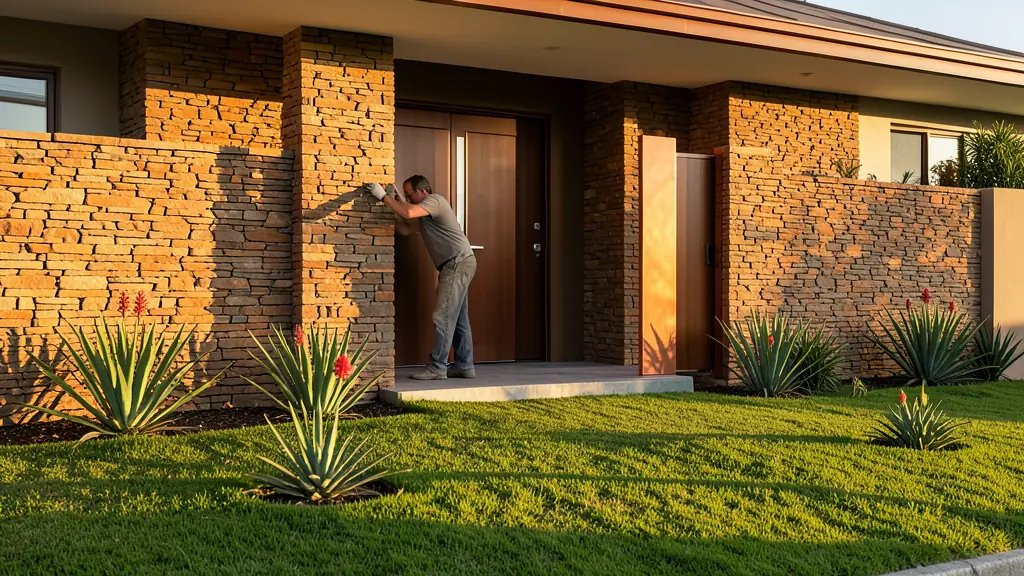
Stone cladding gives a house, a braai wall or a pillar a solid, textured finish. SlateTiles.co.za is a free quote service. You fill in one form and we pass your request to independent stone suppliers and cladding installers in your area, who quote you directly. They can advise on stone type and fixing. There is no fee and no obligation. We do not sell cladding, we do not do the work, and we never give prices.
Types of stone cladding
Cladding is a thin stone layer fixed to a wall. It is not a structural wall. The main options are:
- Natural stone cladding: real stone split or cut into strips and panels. Each piece is different, and the face and colour vary.
- Slate cladding: stacked slate strips with a layered, rustic face. Colours range from charcoal to multicolour with copper, gold and rust tones.
- Manufactured stone: cast concrete made to look like stone. It is lighter and more uniform.
Pieces often come as random lengths with separate corner units. Some stone is quarried in southern Africa and some is imported. Ask where the stone is from and ask for a real sample, because colour varies between batches.
Where stone cladding is used
Most enquiries are for stone cladding for outside walls: entrance walls, garage fronts, gate pillars, boundary walls and braai surrounds. Indoors, it features in lounges, entrance halls and around fireplaces.
Putting stone cladding on a wall changes how the whole house looks, so choose a colour that works with the roof and paint. Warm copper and rust tones suit brick and plaster. Dark slate suits modern, white or grey homes. If you live in an estate, townhouse complex or sectional title scheme, get body corporate or HOA approval for facade changes before you order.
Fixing and weather: what to check
Cladding is heavy, and a poor fixing can fail in years. Ask your supplier and installer about these points:
- The wall must be sound, clean and rough enough for a bond. Smooth concrete or painted walls may need a mesh and a scratch coat.
- The adhesive or mortar must suit stone and outdoor use.
- Cladding needs a damp-proof detail at the base and should not sit in soil.
- Cap pillars and wall tops so water does not run behind the stone.
- Check the existing wall or pillar can carry the extra weight, and ask a builder if in doubt.
Large or structural changes may need plans under the National Building Regulations. Seal exposed stone with a suitable impregnating sealer.
What affects your quote
You will often see people asking about a stone cladding price. We do not give prices here. Suppliers quote on your measurements and choices, and these points matter most:
- The stone: natural, slate or manufactured, and the finish and colour.
- The area in m², plus corner units counted in metres.
- The height of the wall and whether scaffolding is needed.
- The condition of the wall and any preparation, mesh or damp-proofing.
- Supply only, or supply and install.
- Delivery distance and pallet weight.
A photo and rough sizes of each wall make quotes faster.
Comparing stone cladding quotes
Natural stone varies from batch to batch, and prices move with imports, stock and transport. When quotes arrive, check:
- Exact product: the colour, finish, size and thickness, and whether it is calibrated, so every quote is for the same thing.
- Quantities: the price per m², box, pallet or piece, and how much is allowed for cuts and breakage.
- Stock and delivery: in stock or on order, delivery to site or collection, and any off-loading charge.
- VAT and returns: whether VAT is included, how long the price holds and whether unopened boxes can go back.
What to include in your request
- State the wall area in m² and list corners in metres.
- Say which walls: outside, boundary, pillars, braai or interior.
- Name the stone type and colour, or ask for samples.
- Describe the wall surface: brick, block, plaster, painted or smooth concrete.
- Mention estate or body corporate rules and whether you need installation.
Frequently asked questions
Can stone cladding go on any outside wall?
Is slate cladding different from other natural stone cladding?
Do I need approval before cladding my walls?
How do I request stone cladding quotes?
Stone Cladding by province
- Stone Cladding Gauteng
- Stone Cladding Mpumalanga
- Stone Cladding North West
- Stone Cladding Limpopo
- Stone Cladding Northern Cape
- Stone Cladding Free State
- Stone Cladding KwaZulu-Natal
- Stone Cladding Eastern Cape
- Stone Cladding Western Cape
Stone Cladding by city and town
- Stone Cladding in Johannesburg
- Stone Cladding in Pretoria
- Stone Cladding in Centurion
- Stone Cladding in Midrand
- Stone Cladding in Sandton
- Stone Cladding in Randburg
- Stone Cladding in Roodepoort
- Stone Cladding in Krugersdorp
- Stone Cladding in Randfontein
- Stone Cladding in Germiston
- Stone Cladding in Boksburg
- Stone Cladding in Benoni
- Stone Cladding in Kempton Park
- Stone Cladding in Alberton
- Stone Cladding in Vanderbijlpark
- Stone Cladding in Vereeniging
- Stone Cladding in eMalahleni (Witbank)
- Stone Cladding in Middelburg
- Stone Cladding in Secunda
- Stone Cladding in Mbombela (Nelspruit)
- Stone Cladding in Rustenburg
- Stone Cladding in Brits
- Stone Cladding in Klerksdorp
- Stone Cladding in Potchefstroom
- Stone Cladding in Polokwane
- Stone Cladding in Tzaneen
- Stone Cladding in Lephalale
- Stone Cladding in Kimberley
- Stone Cladding in Kathu
- Stone Cladding in Upington
- Stone Cladding in Bloemfontein
- Stone Cladding in Welkom
- Stone Cladding in Sasolburg
- Stone Cladding in Durban
- Stone Cladding in Pinetown
- Stone Cladding in Pietermaritzburg
- Stone Cladding in Richards Bay
- Stone Cladding in Newcastle
- Stone Cladding in Ladysmith
- Stone Cladding in Gqeberha (Port Elizabeth)
- Stone Cladding in East London
- Stone Cladding in Kariega (Uitenhage)
- Stone Cladding in Cape Town
- Stone Cladding in Bellville
- Stone Cladding in Paarl
- Stone Cladding in Stellenbosch
- Stone Cladding in George
- Stone Cladding in Worcester