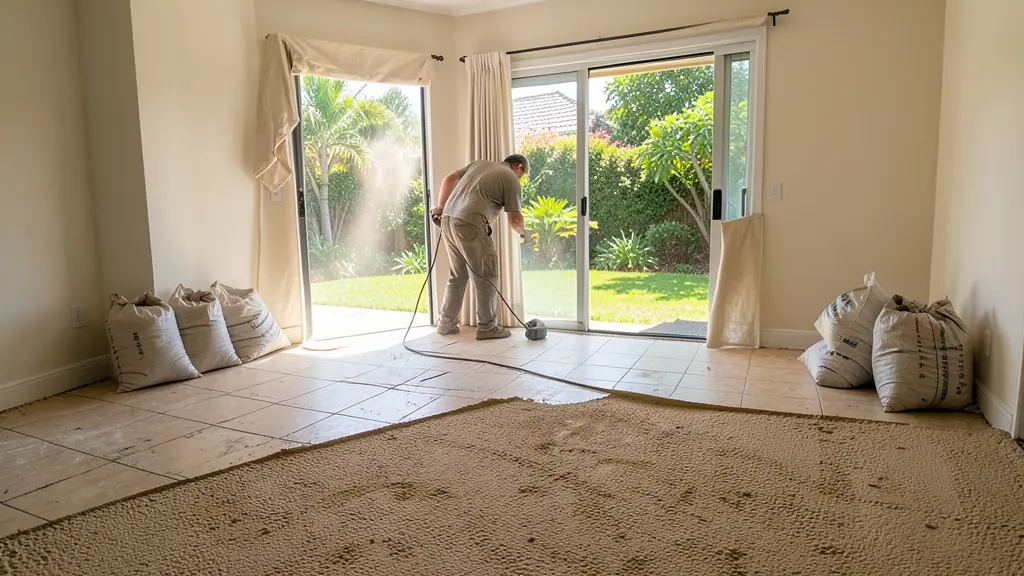
Careful tile removal is the first step to a new slate floor or wall that lasts. SlateTiles.co.za is a free quote service. We pass your request to independent tilers and contractors in your area, and they quote you directly. There is no fee and no obligation. We do not do the work ourselves. Tell us the area, the type of tiles and what you want to lay afterwards, and compare the quotes that come back.
Types of tile removal work
Not all tile removal is the same. The method depends on how the old tiles were fixed and what you want underneath.
- Floor tiles: lifted with breakers and chisels, including ceramic, porcelain and old slate tile removal.
- Wall tiles: taken off kitchen, bathroom and feature walls, often with the plaster behind.
- Screed repair: patching or levelling the base once the tiles are up.
- Rubble removal: bagging and taking the waste away.
Tiles stuck down with strong adhesive take longer than tiles on a weak bed.
Where tile removal is needed
Most tile removal happens before something new goes down. Slate is thick and heavy, so the base must be sound before it is laid.
- Renovations of older homes and townhouses.
- Kitchens, bathrooms and passages being updated.
- Patios and stoeps with cracked or lifted tiles.
- Commercial floors in shops, restaurants and offices.
- Hollow or loose tiles, damp patches and old water damage.
In older buildings, check for old fibre-cement products before work starts, as some may contain asbestos. Do not break or drill them yourself.
How good removal is done
Careful removal protects the base and keeps dust and noise under control. Ask the contractor about these points:
- Dust control: sheeting, wetting down and closing doors, with a vacuum where possible.
- Services: checking for pipes, floor heating and electrical conduit under the tiles.
- Base: removing old adhesive and checking the screed for cracks, hollow spots and damp.
- Levels: keeping the new floor height in mind at doors and thresholds.
Body corporate and HOA complexes often limit working hours, so say where you live.
What affects your quote
Tile removal is quoted on the job, not on a standard rate. These details help contractors quote properly:
- The area of floor or wall in m² and the type of tiles.
- How well the tiles are bonded, and the number of layers.
- The floor level or storey, and access for carrying out rubble.
- Screed repairs, levelling or waterproofing needed afterwards.
- Whether the contractor must also lay the new slate tiles.
Photos of the room and any loose tiles help the installer judge the job.
Comparing quotes for tile removal
The lowest figure is not always the best deal. When your quotes arrive, check:
- Scope: exactly what is included, from surface preparation and materials to cutting, sealing and clean-up.
- Materials: the slate, adhesive, grout, sealer or fixings allowed for, and who buys and delivers them.
- Timing: when the work can start, how long it takes, and curing or drying time before the area can be used.
- Guarantee and terms: any workmanship guarantee, deposit, payment stages and how long the price holds.
What to include in your request
- State the area in m² and whether it is floor or wall.
- Name the tile type: ceramic, porcelain, slate or stone.
- Say what will be laid afterwards and when.
- Mention the floor level, access and any stairs for rubble.
- Say if screed repair and levelling must be included.
Frequently asked questions
Do I need tile removal before laying slate?
Will tile removal damage the screed or plaster?
Is tile removal messy and loud?
How do I request tile removal quotes?
Tile Removal by province
- Tile Removal Gauteng
- Tile Removal Mpumalanga
- Tile Removal North West
- Tile Removal Limpopo
- Tile Removal Northern Cape
- Tile Removal Free State
- Tile Removal KwaZulu-Natal
- Tile Removal Eastern Cape
- Tile Removal Western Cape
Tile Removal by city and town
- Tile Removal in Johannesburg
- Tile Removal in Pretoria
- Tile Removal in Centurion
- Tile Removal in Midrand
- Tile Removal in Sandton
- Tile Removal in Randburg
- Tile Removal in Roodepoort
- Tile Removal in Krugersdorp
- Tile Removal in Randfontein
- Tile Removal in Germiston
- Tile Removal in Boksburg
- Tile Removal in Benoni
- Tile Removal in Kempton Park
- Tile Removal in Alberton
- Tile Removal in Vanderbijlpark
- Tile Removal in Vereeniging
- Tile Removal in eMalahleni (Witbank)
- Tile Removal in Middelburg
- Tile Removal in Secunda
- Tile Removal in Mbombela (Nelspruit)
- Tile Removal in Rustenburg
- Tile Removal in Brits
- Tile Removal in Klerksdorp
- Tile Removal in Potchefstroom
- Tile Removal in Polokwane
- Tile Removal in Tzaneen
- Tile Removal in Lephalale
- Tile Removal in Kimberley
- Tile Removal in Kathu
- Tile Removal in Upington
- Tile Removal in Bloemfontein
- Tile Removal in Welkom
- Tile Removal in Sasolburg
- Tile Removal in Durban
- Tile Removal in Pinetown
- Tile Removal in Pietermaritzburg
- Tile Removal in Richards Bay
- Tile Removal in Newcastle
- Tile Removal in Ladysmith
- Tile Removal in Gqeberha (Port Elizabeth)
- Tile Removal in East London
- Tile Removal in Kariega (Uitenhage)
- Tile Removal in Cape Town
- Tile Removal in Bellville
- Tile Removal in Paarl
- Tile Removal in Stellenbosch
- Tile Removal in George
- Tile Removal in Worcester