Get a quote
T-07 · free calculator

Which Slate? The Slate Selector

Choose where the slate is going and see what to ask for: the thickness and finish, calibrated or not, the adhesive and joint, the sealer and the care, with a full reference table below.

  • Cost: free, no sign-up
  • Works on: phone and computer
  • Then: get quotes in one step
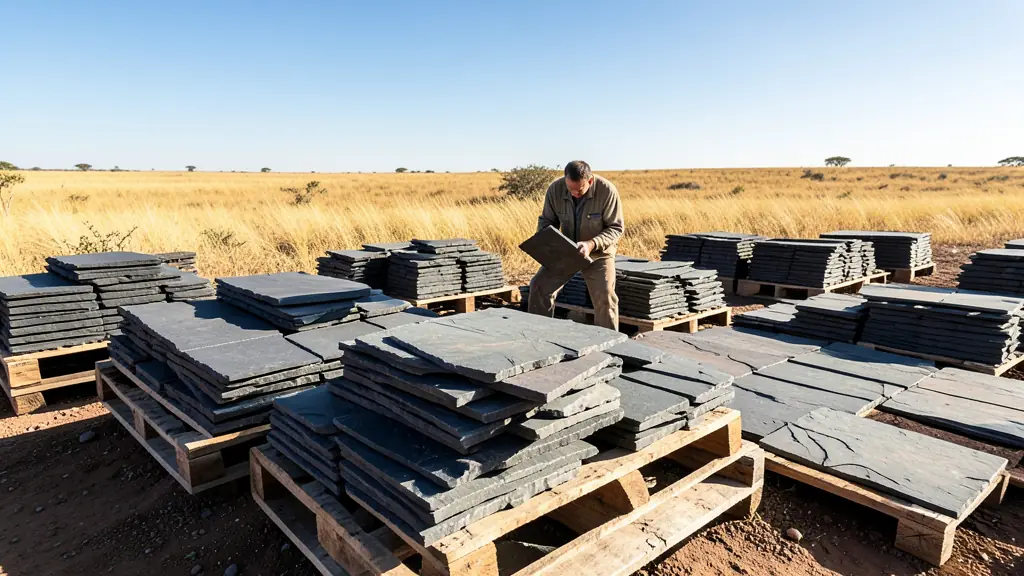
Stacks of charcoal and grey natural slate tiles on pallets in a stone yard with a tiler checking a sample

Where is the slate going?

These are typical choices. The adhesive and sealer makers' instructions, and your tiler or roofer, have the final word.

Indoor floor

Thickness
10 mm calibrated, or 12–20 mm uncalibrated for a rustic look
Finish
Natural cleft, brushed or honed
Sizes
400 × 400 to 900 × 600 mm
Fixing
Natural-stone adhesive on a 10–12 mm notched trowel, back-buttered; flexible adhesive over underfloor heating or suspended slabs
Joint
3–5 mm calibrated, 6–10 mm uncalibrated
Sealer
Impregnating sealer or colour enhancer; satin topical sealer only in low-traffic rooms
Care
pH-neutral cleaner; reseal every 3–5 years

More about slate floor tiles

Reference table

UseThicknessFinishSizesFixingJointSealerCare
Indoor floor10 mm calibrated, or 12–20 mm uncalibrated for a rustic lookNatural cleft, brushed or honed400 × 400 to 900 × 600 mmNatural-stone adhesive on a 10–12 mm notched trowel, back-buttered; flexible adhesive over underfloor heating or suspended slabs3–5 mm calibrated, 6–10 mm uncalibratedImpregnating sealer or colour enhancer; satin topical sealer only in low-traffic roomspH-neutral cleaner; reseal every 3–5 years
Patio, stoep or steps12–20 mm uncalibrated or 10 mm calibrated on a sound slabNatural cleft (non-slip)300 × 300 to 600 × 400 mm, or random flagstoneFlexible exterior adhesive, full bed and back-buttered, with a fall away from the house6–10 mm flexible grout, with movement joints at the edges and every few metresBreathable impregnating sealer; no glossSweep and rinse; reseal every 2–3 years
Pool surround15–20 mm uncalibrated or 10 mm calibrated, with bullnose copingsNatural cleft; avoid honed300 × 300 to 600 × 400 mmFlexible, water-resistant adhesive with full contact; check the slate suits salt chlorinators5–8 mm flexible groutImpregnating sealer rated for pool areasRinse off pool chemicals; reseal every 1–2 years
Shower or bathroom floor10 mm calibratedNatural cleft or brushed (grip when wet)Small formats or mosaic on shower floors so they follow the fall; larger tiles elsewhereFlexible adhesive over a waterproofing membrane, with a fall to the drain3–5 mm flexible or epoxy groutImpregnating sealerSqueegee after use; reseal every 1–2 years
Feature wall or splashback8–10 mm calibrated, or split-face panelsNatural cleft, honed for splashbacks, split-face for texturePanels of 600 × 150 mm, or tiles up to 600 × 300 mmNatural-stone adhesive, back-buttered; mechanical fixings above about 3 m2–3 mm, or butt-jointed panelsImpregnating sealer; seal splashbacks against oilDust or wipe; reseal splashbacks every 1–2 years
Exterior stone claddingSplit-face panels 15–40 mm, or thin veneersSplit-face or rock-facePanels around 600 × 150 mm, or random piecesFlexible exterior adhesive on a sound plastered or block wall; mechanical fixings for heightDry-stacked, or 5–10 mm pointed jointsOptional breathable water repellentWash down; check fixings and joints
Fireplace, hearth or braai10–20 mmNatural cleft, honed for hearthsCut to fit; slabs for hearthsHeat-resistant flexible adhesive; keep slate out of direct flame3–5 mmHeat-tolerant impregnating sealer on the hearthClean soot with a pH-neutral cleaner
Driveway30 mm or moreNatural cleft300 × 300 to 600 × 400 mm, or flagstonesFull mortar bed on a reinforced concrete slab8–12 mmImpregnating sealer with oil-stain protectionClean oil spills quickly
Roof5–8 mm roofing slate, or fibre-cement slatesNatural split400 × 200 to 600 × 300 mmTwo copper or stainless nails, or hooks, on treated battens over underlayHeadlap of 65–115 mm depending on the pitchNoneReplace slipped or cracked slates promptly

Measure up

Know the size? Enter it and we add the area to your request. Skip it if you are not sure.

0 m² to order

Roofs, walls and steps: measure each face and add them up, or type the total in the form.

Get a free quote

Tell us what you need and where. A slate supplier, tiler, cladding installer or roofer who works in your area quotes you directly.

Measure sheetMS-76690
Tick what applies (optional)

Free and no obligation. By sending you agree that we may share your request with a suitable supplier or installer. See our privacy policy.

Choose where the slate goes (floor, patio, pool, shower, wall, cladding, fireplace, steps or roof) and see the thickness, finish, adhesive, grout joint and sealer that suit it.

Calibrated or uncalibrated?

Calibrated (gauged) slate is machined on the back to an even thickness, usually 10 mm. It is laid on a thin notched-trowel bed like porcelain, which is quicker and uses less adhesive, and suits indoor floors, walls and showers. Uncalibrated slate keeps its natural split back and varies in thickness. It costs less per m², has a more rustic look and suits patios, stoeps and farmhouse floors, but it needs a thick bed, more adhesive and a tiler who knows stone, so the installed price is often similar.

Finishes

  • Natural cleft (riven): the split face of the stone, textured and naturally non-slip. The default for outdoors, pools and showers.
  • Honed: ground smooth and matt. Easy to clean and good for kitchens and living areas, but less grippy when wet.
  • Brushed or tumbled: softened edges and a worn, antique look, with good grip.
  • Split-face strips: narrow slate strips stacked into panels for feature walls and cladding.

Frequently asked questions

What thickness of slate do I need for a floor?
10 mm calibrated slate is standard for indoor floors on a sound slab. Uncalibrated slate averages 12–20 mm. Patios with foot traffic only can use 10–20 mm on a concrete base; driveways need 30 mm or more on a reinforced slab.
Is slate slippery when wet?
Natural cleft slate has good grip when wet, which is why it is popular around pools. Honed slate and slate with a gloss sealer can be slippery, so keep those indoors and away from showers.
Can slate be used in a shower?
Yes. Use calibrated slate with a natural cleft or brushed finish on the floor, a flexible adhesive over a waterproofing membrane, a fall to the drain and an impregnating sealer, resealed every year or two.

Products and services this helps with

More calculators and guides

Get a free quote